
Clinical documentation and coding logic often diverge.
Important clinical details may be present but not captured in structured coding, while coding decisions may lack clear linkage to supporting documentation.
This creates inconsistencies, missed revenue, and audit risk.
Clinical narratives are translated into structured coding outputs that align with coding standards and payer expectations.
Coding decisions are evaluated against documentation, coding rules, and payer expectations, ensuring codes reflect both clinical reality and reimbursement requirements.
Mapora converts clinical documentation into structured, accurate codes while preserving clinical context and supporting evidence.
Payer Rule Intelligence
Pattern Recognition & Risk Alerts
Clean Claim Engine
Documentation & Coding Alignment
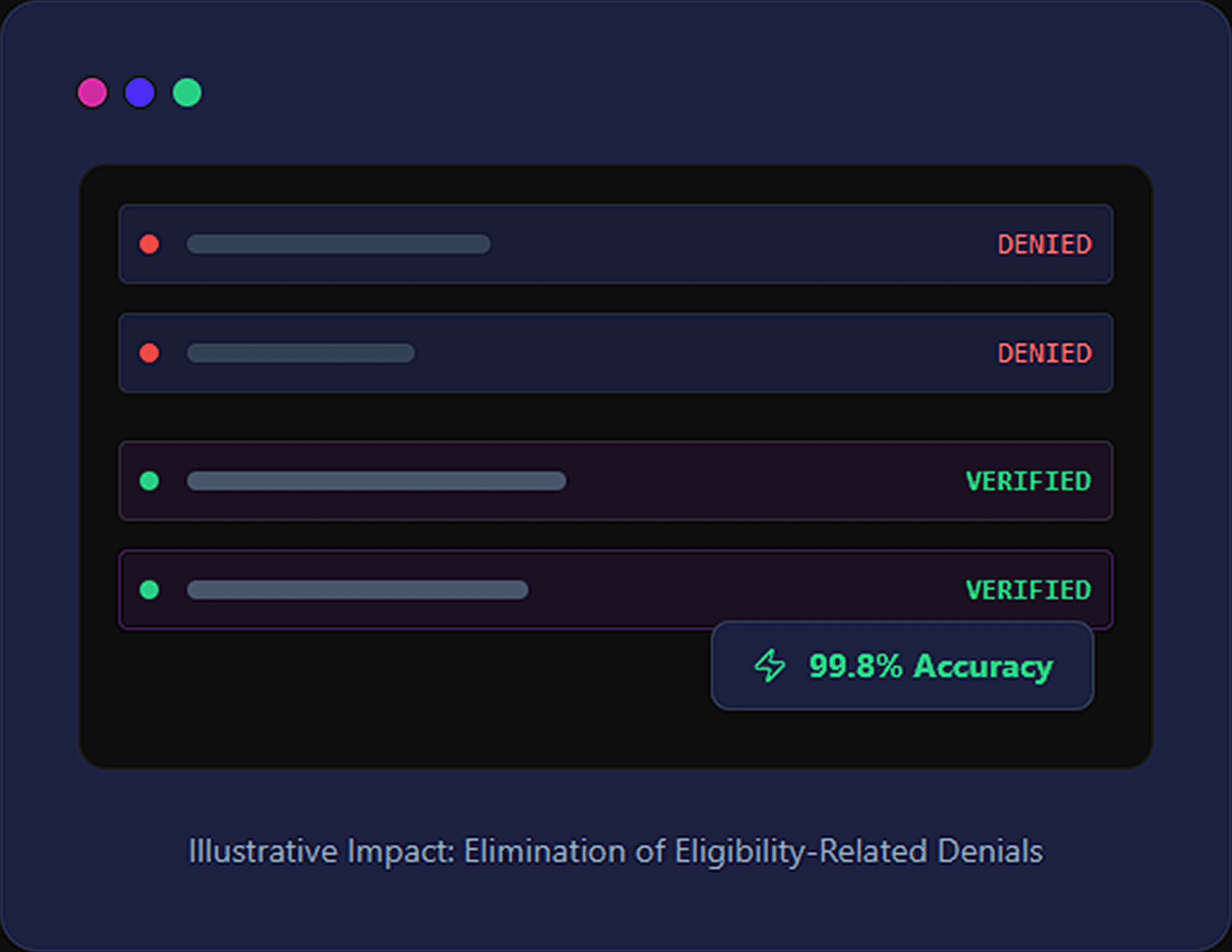
Eligibility & Benefits Sync
Mapora reviews the clinical documentation against the codes assigned to a claim. Where the record contains detail that is not reflected in the coding like a more specific diagnosis, a relevant qualifier, a condition documented but coded at a higher level of generality, Mapora flags it for review. ICD coding allows for significant levels of specificity, and the difference between a general and a specific code can affect both claim acceptance and reimbursement value. Mapora surfaces these gaps before submission so the coding team can review and correct while the claim is still in the provider’s hands.
Accurate coding depends on two things which are what the clinician documented and how completely that documentation was translated into codes. Mapora works at the translation layer, reviewing whether the clinical record supports the codes assigned and whether relevant conditions in the record have been captured at the right level of specificity. Where gaps or inconsistencies are found, Mapora surfaces them with enough context for the coding team to resolve them without having to re-review the entire record. The output is a claim that more accurately reflects the clinical complexity of the case.
Payers reimburse based on the coded claim, not the clinical record. A diagnosis coded at a general level will generate a different reimbursement outcome than the same condition coded with full specificity, even if the clinical documentation supports the more specific code. In DRG-based reimbursement models, specificity directly affects which payment band a case falls into. Across a high volume of claims, the cumulative reimbursement gap from under-specified coding is significant. Getting specificity right at the coding stage is one of the most reliable ways to ensure reimbursement reflects the care actually delivered.
Many coding-related rejections are predictable. A code that does not match the documented diagnosis, a primary and secondary code combination that conflicts under payer rules, a specificity level that does not meet submission requirements. These are identifiable before a claim leaves the provider’s system. Mapora checks for these issues systematically across every claim, so the coding team receives a targeted list of what needs to be corrected rather than discovering the problem through a payer rejection. Fewer errors reach submission, and the rework cycle that follows a rejection is avoided.
Secondary conditions documented in the clinical record but coded at too general a level represent a form of reimbursement loss than a missing code, but the financial impact is the same. Mapora identifies where a captured condition has been coded without the specificity the clinical record supports. A complication documented in detail but assigned a non-specific ICD code, a comorbidity present but not coded to the level that affects DRG weighting. These are the gaps Mapora surfaces. The condition is there. The specificity is not. Mapora flags the difference before submission so the coding team can correct it while the claim is still in the provider’s hands.